Dog Deshedding in Gwinnett County: What It Is & Why It Works
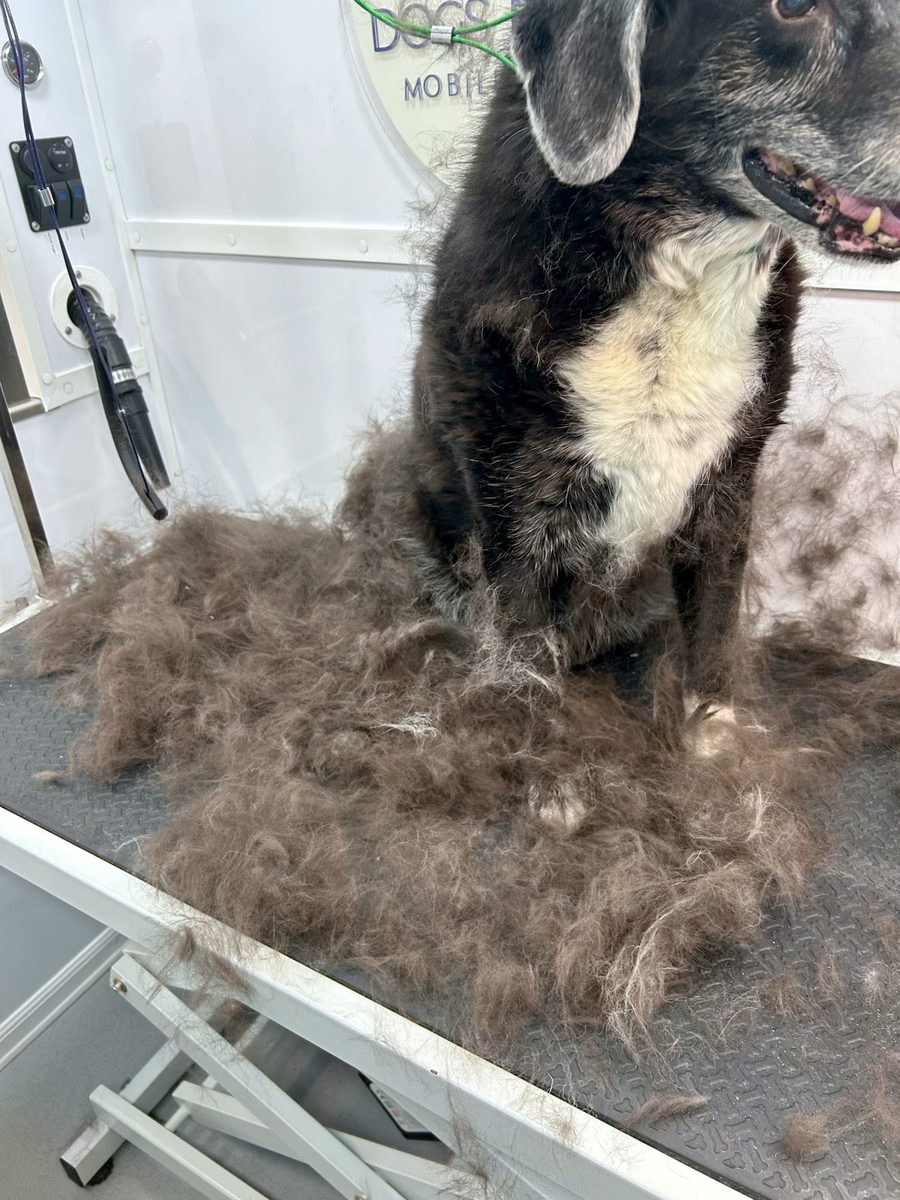
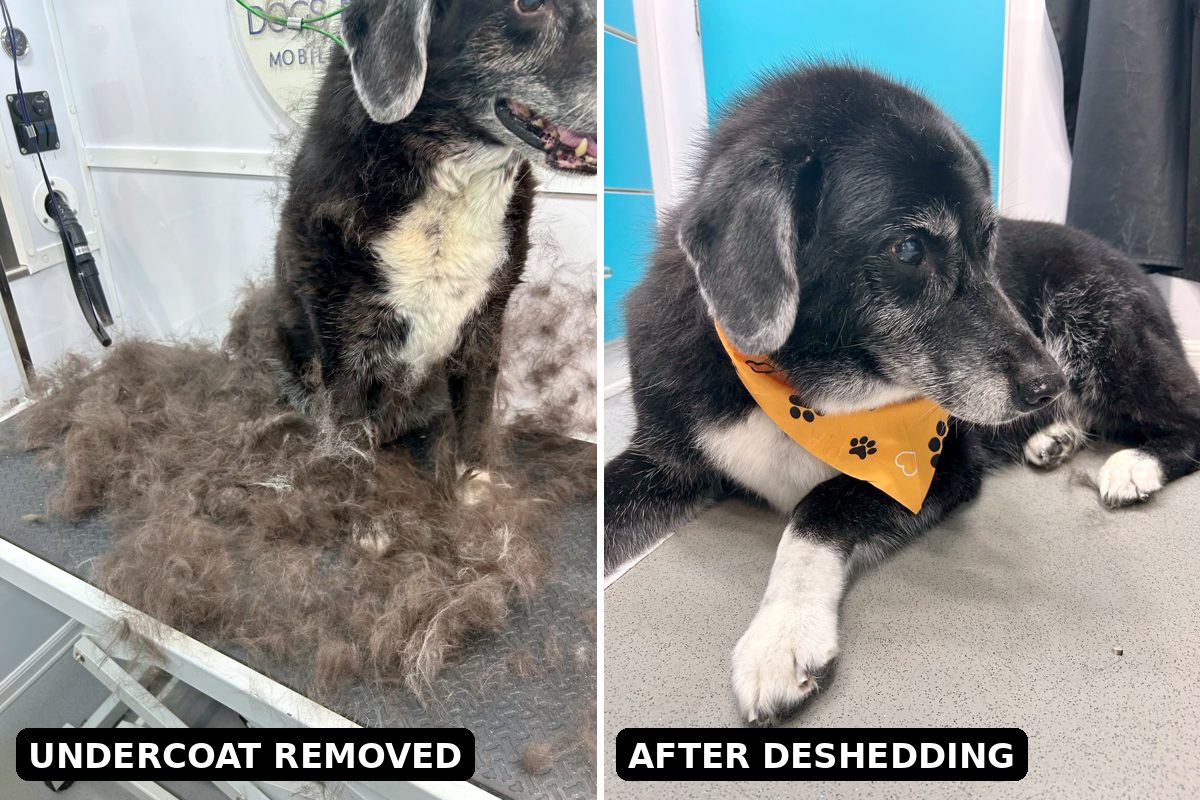
Take a look at the photo above. That pile of fur on the table came off one dog in one session. She's a sweet senior girl, and from the outside her coat didn't look like much. Underneath, though, she was carrying months of dead undercoat.
That's the thing about shedding: most of what bothers your dog (and ends up on your couch) is hidden below the surface. Here's what deshedding is, which dogs need it, and what you can expect from a professional session with Dogs'N Friends.
What is deshedding?
Deshedding is a grooming treatment that removes the loose, dead undercoat a dog has already shed but that is still trapped in the coat. It is not a haircut. The goal is to leave the healthy topcoat in place and clear out the dense, fluffy layer underneath that has stopped growing and is just sitting there.
Regular brushing at home helps, but a standard brush mostly works the top layer. The undercoat stays packed in close to the skin, and that's where the problems start.
Why the trapped undercoat matters
Heat. A coat full of dead undercoat holds heat and humidity against the skin. In a Georgia summer, that's a real comfort issue for your dog.
Skin health. Packed undercoat keeps moisture in and air out, which can lead to irritation and hot spots.
Matting. Loose undercoat tangles with the topcoat and forms mats, especially behind the ears, on the chest and on the back legs.
Your house. Everything that isn't removed on the grooming table eventually comes out on your floors, furniture and clothes.
Which dogs need deshedding?
Deshedding is made for double-coated dogs, meaning dogs with a soft, dense undercoat under a longer outer coat. Common examples include:
Golden Retrievers and Labrador Retrievers
German Shepherds
Australian Shepherds and Border Collies
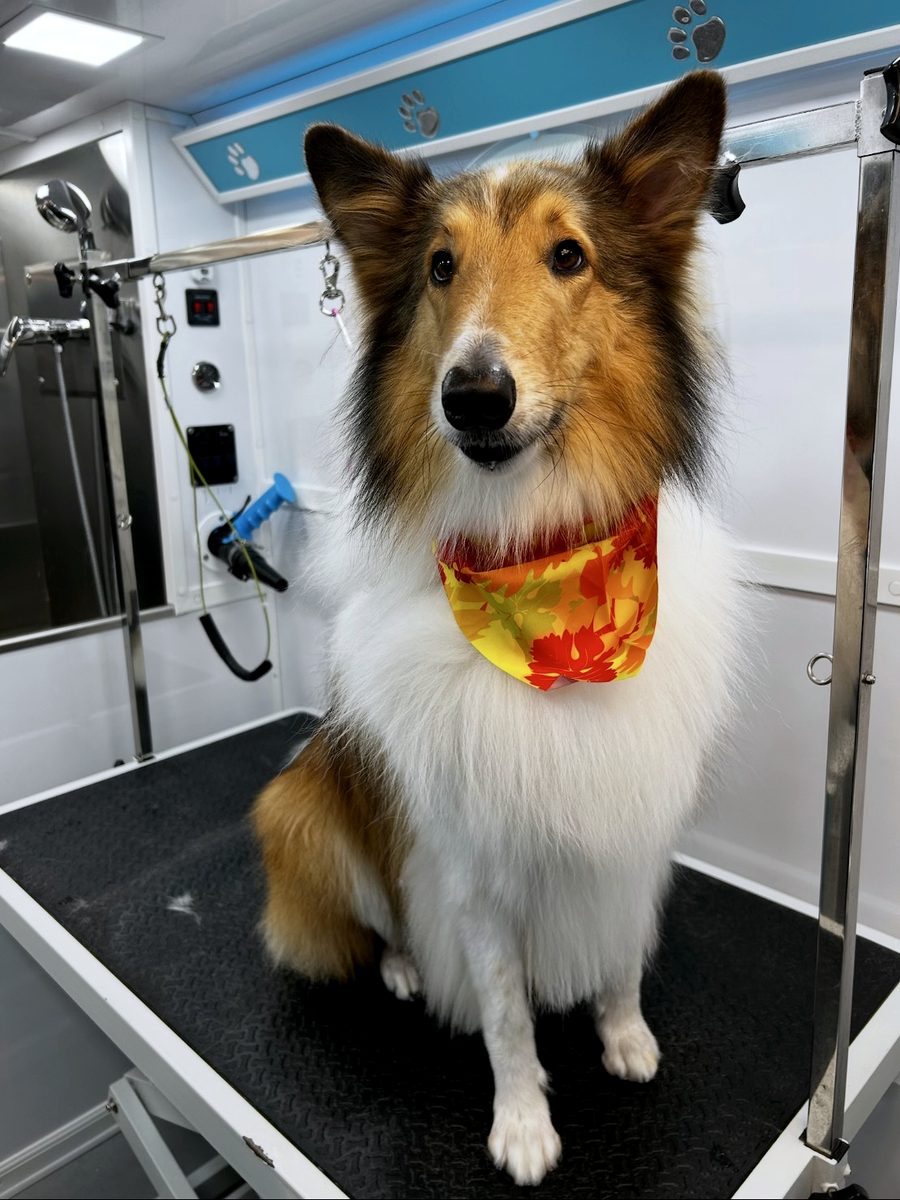
Shetland Sheepdogs and Collies
Corgis
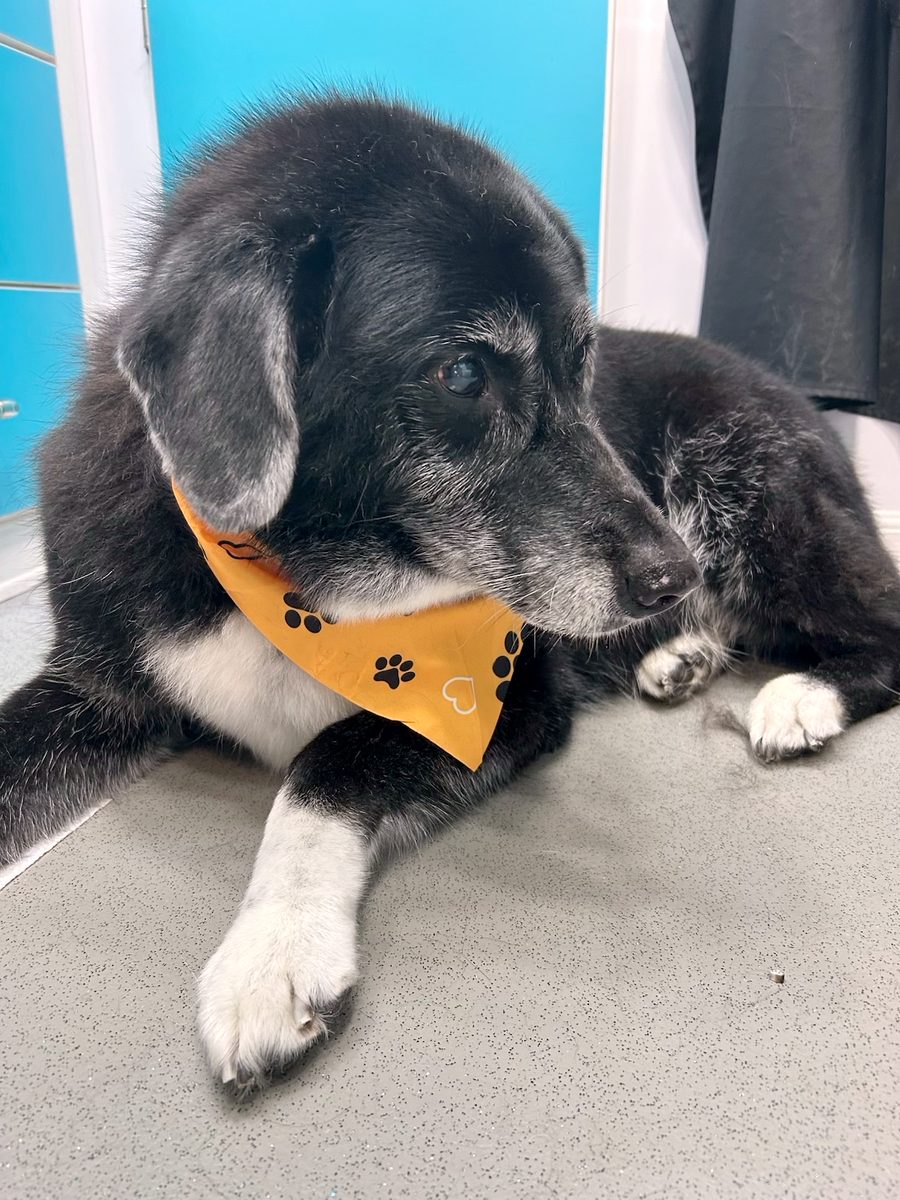
Many mixed breeds with a thick, fluffy coat, like the senior girl in our photos
Not sure if your dog has a double coat? Part the fur down to the skin. If you see a soft, woolly layer underneath the longer hair, you're looking at undercoat.
Please don't shave a double-coated dog
It's tempting to shave a heavy shedder to "fix" the shedding, especially when it's hot. We don't recommend it. A double coat helps protect the skin from sun and regulate temperature, and in some dogs the coat can grow back patchy or with a different texture after a close shave.
Deshedding gets you what you actually want (less loose fur around the house and a cooler, more comfortable dog) while keeping the coat that protects them. Your dog will still shed, because that's natural, but a lot less of it ends up on your floors.
What happens during a deshedding session with Dogs'N Friends
Everything happens inside our mobile grooming van, parked right at your home. Your dog gets our full attention from start to finish. There are no cages and no car ride.
Deshedding bath. We use EZ Groom Filthy Beast, a professional tangerine-citrus shampoo made to detangle, loosen mats and help release loose undercoat. To be clear: no shampoo stops shedding. Shedding is completely natural for your dog. What the right shampoo does is loosen the hair that's already dead, so more of it comes out on our table instead of on your couch in the days after the groom.
High-velocity drying. Our dryer does more than dry. The airflow pushes loose undercoat out of the coat. This is where most of that pile in the photo comes from.
Brushing and raking. We work through the coat section by section with tools made for undercoat until the loose fur is out.
Finishing touches. Nails, ears, teeth brushing, sanitary trim and a fresh bandana, like the one our senior girl is wearing in her after photo.
Heavy coats take time, and we don't rush. Taking breaks when an older dog needs them is part of the job.
How often should your dog be deshedded?
For most double-coated dogs, every 6 to 8 weeks keeps shedding under control. Many dogs "blow" their coat more heavily in spring and fall, so an extra session during those seasons can make a big difference. We'll recommend a schedule based on your dog's coat after the first visit.
If you want more detail on grooming schedules in general, read How Often Should You Take Your Dog to the Groomer?
Keeping shedding down between visits
Brush 2–3 times a week, all the way down to the skin, not just over the top.
Pay extra attention to friction areas: behind the ears, under the collar, the chest and the "pants" on the back legs.
Don't wait for mats. Once mats form, they're uncomfortable for your dog and harder to remove gently.
Keep a regular grooming schedule. Consistent sessions are easier on your dog than one big session after months of buildup.
Book a deshedding session in Gwinnett County
Deshedding is included in our Full Groom package for double-coated breeds. Because heavy coats vary a lot, the final price depends on your dog's size, coat condition and behavior. You can see our packages on the pricing page or learn more about the Full Groom.
We serve Duluth, Suwanee, Johns Creek, Lawrenceville, Alpharetta and nearby areas.
Ready for less fur on your floors? Get a free quote or call or text us at 470-979-8167.
